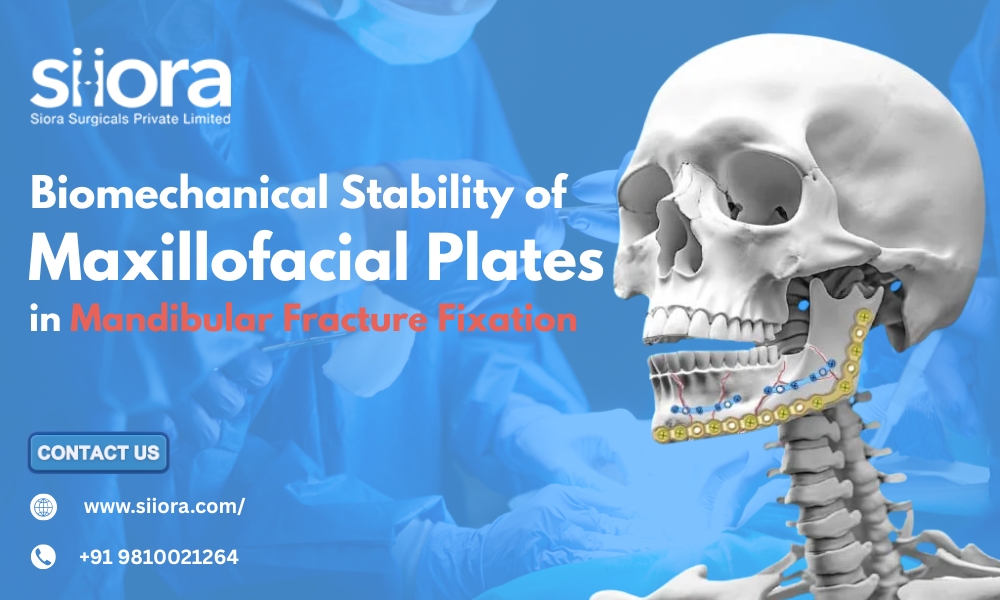
When it comes to treating fractures of the mandible, the lower jawbone, achieving stable and reliable fixation is crucial. The mandible plays a key role not only in facial aesthetics but also in vital functions like chewing, speaking, and breathing. So, when a fracture occurs, ensuring that the broken bone segments are held together securely allows for proper healing and restoration of function. This is where maxillofacial plates come into play, serving as the backbone for stabilizing these fractures.
What Are Maxillofacial Plates?
Maxillofacial titanium plates are small metallic devices, often made from titanium or stainless steel, designed to bridge and hold fractured bone segments. These plates are fixed onto the bone using screws, creating a rigid framework that maintains bone alignment during healing. Over the years, advancements in material science and surgical techniques have vastly improved the design and effectiveness of these plates.
Why Is Biomechanical Stability Important?
Biomechanical stability refers to the ability of the fixation system, here, the maxillofacial plates and screws, to withstand the forces exerted on the jaw during normal functions such as chewing and talking. Without adequate stability, the fracture may shift, leading to delayed healing, malunion (incorrect alignment), or even nonunion (failure to heal).
The mandible is subjected to considerable forces, including bending, torsion, and compression. Therefore, the fixation method must resist these forces to maintain proper bone positioning throughout the healing process, which typically lasts 6 to 8 weeks.
Factors Influencing Biomechanical Stability
Several key factors influence the biomechanical stability of maxillofacial plates:
- Plate Design and Material: The shape, thickness, and flexibility of the plate determine how well it distributes forces. Titanium plates are widely favored because they combine strength with biocompatibility and are less likely to cause allergic reactions.
- Number and Position of Screws: Proper screw placement ensures the plate anchors firmly to bone segments. More screws can increase stability, but excessive hardware may also disrupt blood supply to the bone.
- Fracture Location and Pattern: Different parts of the mandible experience varying forces. For example, fractures in the angle region are subjected to stronger bending forces than those near the symphysis (chin). The type of fracture, whether simple, comminuted (multiple fragments), or displaced, also affects the fixation approach.
- Surgical Technique: How the plate is contoured and adapted to the bone surface, as well as the precision of screw insertion, critically impacts stability.
Types of Maxillofacial Plates and Their Stability Profiles
There are several common types of plates used in mandibular fracture fixation:
- Mini Plates: These are thin, lightweight plates typically used for non-load-bearing areas or simple fractures. They offer adequate stability for certain fractures but may not withstand heavy chewing forces alone.
- Locking Plates: Featuring screws that lock into the plate, these provide superior fixation and prevent loosening over time. They are especially useful in osteoporotic bone or complex fractures.
- Load-Bearing Plates: Designed to take on the full load of the mandible during healing, these plates are thicker and used when the bone itself cannot withstand normal forces.
- Compression Plates: These plates apply compressive force at the fracture site to promote bone healing and increase stability.
The choice of plate depends on the clinical scenario, balancing between providing enough stability and minimizing hardware bulk.
Biomechanical Studies and Clinical Outcomes
Laboratory biomechanical studies often simulate jaw forces on different plate configurations to determine which offer the best resistance to bending and torsion. These studies help surgeons choose the ideal plate system for specific fracture types.
Clinically, patients treated with stable maxillofacial plate fixation typically experience fewer complications, faster healing, and quicker return to normal jaw function. When plates fail to provide sufficient stability, patients may suffer from pain, malocclusion (misalignment of teeth), or require additional surgeries.
The Human Side of Stability
While the science and engineering behind maxillofacial plates are impressive, it’s important to remember that each patient’s recovery depends on more than just hardware. Factors such as overall health, nutrition, oral hygiene, and adherence to post-operative care instructions all contribute to successful healing.
Surgeons carefully evaluate each case to select the fixation system that offers the best biomechanical stability tailored to the individual’s needs. This personalized approach ensures patients can regain their smile, chew comfortably, and get back to everyday life with confidence.
Looking to be a partner of one of the reputed orthopedic medical implant manufacturers in Lebanon? Contact Siora Surgicals Pvt. Ltd., a leading name in the orthopedic implant manufacturing industry, with a presence in over 50 countries. reputed orthopedic medical implant manufacturers in Lebanon? Contact Siora Surgicals Pvt. Ltd., a leading name in the orthopedic implant manufacturing industry, with a presence in over 50 countries.
 siiora surgicals pvt. ltd